
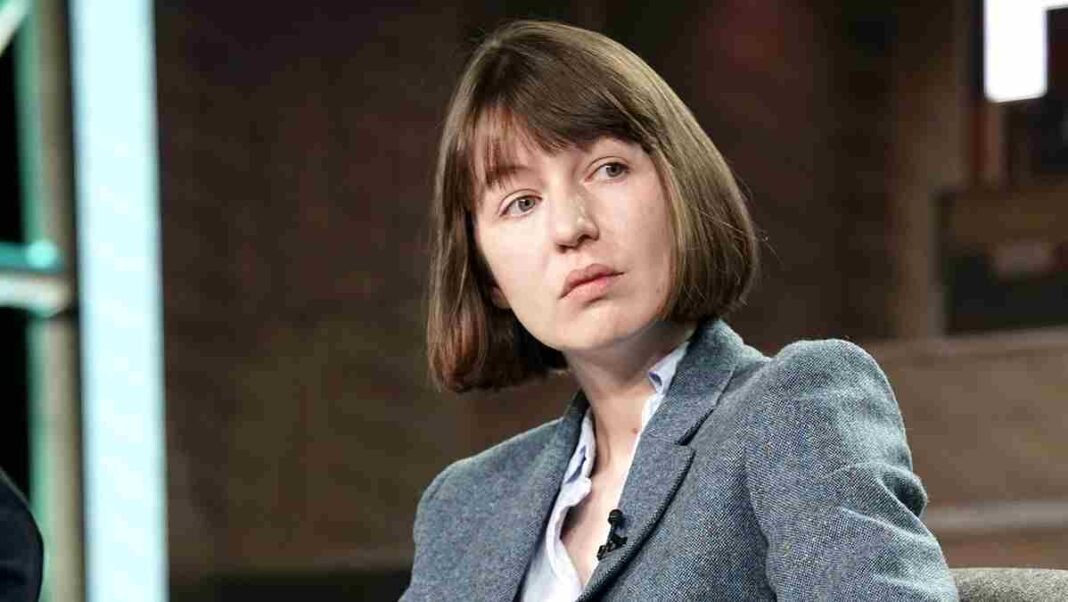
Sally Rooney’s fourth novel, Intermezzo, has solidified its status as 2024’s literary juggernaut, clinching the prestigious Sky Arts Award for literature in early 2025. The accolade, announced amid a whirlwind of year-end accolades, crowns a book that shattered sales records in Ireland and landed on over 20 “Best Books of 2024” lists from outlets like The New York Times, The Guardian, and Vogue. Yet, as Rooney’s star ascends, a shadow looms: her outspoken activism for Palestinian causes and support for the proscribed group Palestine Action could force her existing works off UK shelves and halt future publications there.
Released on September 24, 2024, by Faber & Faber, Intermezzo marks a bold pivot for the 34-year-old Dublin native. Departing from the millennial female protagonists of Conversations with Friends (2017), Normal People (2018), and Beautiful World, Where Are You? (2021), the novel centers on two grieving brothers—Peter, a harried Dublin barrister in his thirties, and Ivan, a 22-year-old chess prodigy retreating to a remote Irish cottage. Their father’s sudden death unravels a tapestry of familial fractures, illicit affairs, and tentative romances, all rendered in Rooney’s signature spare prose laced with philosophical heft.
What elevates Intermezzo to Rooney’s most ambitious work yet? Critics hail its intimate dissection of male vulnerability and fraternal bonds, themes rarely foregrounded in her oeuvre. Peter juggles a domineering ex-girlfriend, Sylvia, and a younger lover, Naomi, whose casual dominance exposes his emotional paralysis. Ivan, meanwhile, navigates a charged connection with Margaret, a sharp-witted older woman whose own scars mirror his isolation. “Rooney has always excelled at the quiet devastations of intimacy,” writes The Irish Times, “but here she amplifies them through grief’s distorting lens, asking: What if love is just another form of temporary reprieve?”
The novel’s genesis traces back to lockdown reveries. Rooney, an avid chess enthusiast, drew from online tutorials and a vivid mental image of a simultaneous exhibition in a rural arts center. “I wrote the scene of Ivan playing chess, but I was stuck until I gave him a brother,” she revealed in a rare interview with Literary Hub. This brotherly axis unlocked the book’s core: how loss reshapes not just individuals, but the invisible threads binding them. Readers on Goodreads echo the praise, with one reviewer calling it “Rooney’s first five-star triumph—mature, stream-of-consciousness brilliance balanced by unmatched dialogue.”
Commercially, Intermezzo soared. It became Ireland’s fastest-selling book of 2024, outpacing even Normal People, whose BBC adaptation catapulted Rooney to global fame. Barack Obama named it among his favorite reads, while U.S. sales propelled it to New York Times bestseller status. Shortlisted for the An Post Irish Book Awards and nominated for the Dublin Literary Award, it’s a testament to Rooney’s grip on a generation craving unflinching portraits of desire and despair.
But triumph collides with turmoil. In November 2025, Rooney testified in a UK High Court challenge against the government’s move to classify Palestine Action—a nonviolent protest group targeting UK complicity in Israel’s Gaza operations—as a terrorist organization. Drawing from her own royalties woes, she warned that Faber & Faber might be legally barred from paying her earnings if suspected of funding the group. “The disappearance of my work from bookshops would mark a truly extreme incursion by the state into artistic expression,” she stated, echoing her June 2025 praise for the group’s RAF Brize Norton protest.
Rooney’s activism isn’t new. In October 2024, she joined 5,500 writers in boycotting Israeli cultural institutions, and she’s twice rejected Hebrew translations of her books in solidarity with Palestinian authors. Now, with the UK ban looming, she skipped the Sky Arts ceremony in person, citing arrest risks. “It’s almost certain I can no longer publish new work in the UK,” she told the court, a stark irony for an author whose explorations of power—personal, political, amorous—resonate worldwide.
As 2025 unfolds, Intermezzo endures as a beacon of Rooney’s evolution: raw, introspective, and unyieldingly human. Will her voice be silenced in one market? Fans and free-speech advocates hope not. In a divided world, Rooney’s words—on love’s fragility and solidarity’s cost—feel more urgent than ever.