
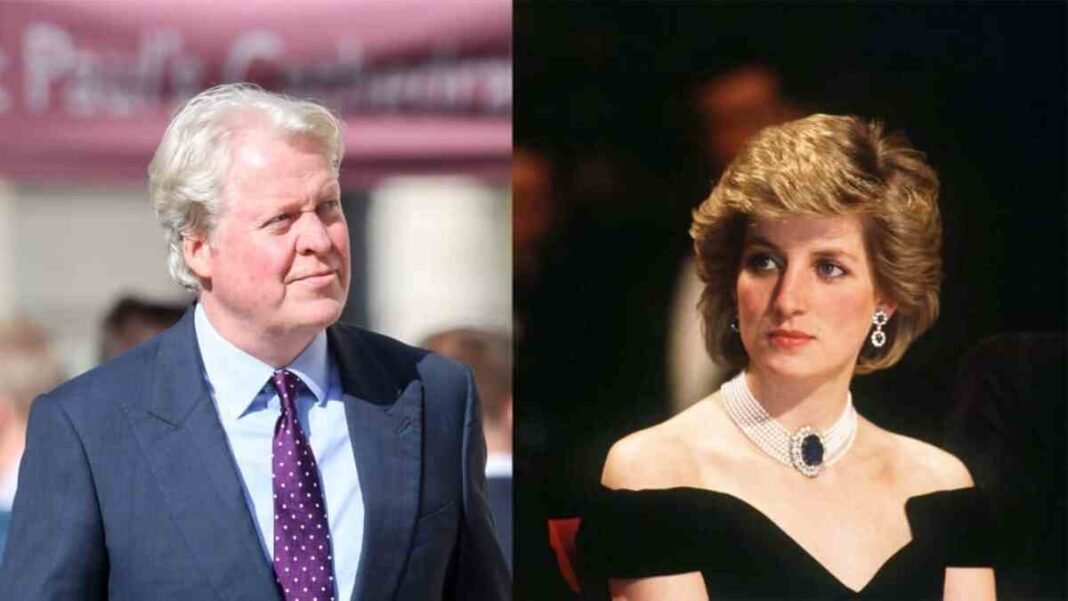
Almost 30 years since Princess Diana tragically died, her brother Charles Spencer has published a memoir that has brought the British royal family under intense public scrutiny once again. His book Swan Song Diana My Sister hits book stores this week, and Buckingham Palace has mounted an extraordinary response to its publication to indicate how much the issue still niggly.
Spencer, 9th Earl Spencer, the most vocal of his family’s defenders of the late princess of Wales, revisits the unruly period following the now infamous 1997 Paris car crash that took her life. The most sensational account details a telephone exchange with the prince of Wales, at that time designated as the next king. Original’s account of the conversation indicates that the prince was enraged at Spender’s decision to have the young princes William and Harry walk behind their mother’s hearse; “no, ” he is quoted as telling his Earl, “rest assured we will forget her soon enough, ” before hanging up the phone.
The allegation surfaced in newspaper extracts last week and prompted an unprecedented statement from the palace. Though claiming the press secretary has confirmed the royal family normally refrains from commenting on books, it observed that ‘the pain of fraternal grief can cloud reason, affect judgment and colour memory in ways others do not recognise, even many years after such a loss.’ Spencer has declined to water down his account. In an interview with the BBC he reaffirmed that ‘those were the words I said’, describing the palace response as a bit of ‘gaslighting’. ‘Who wakes up in the morning and finds they have been gaslit by the king?’ he asked.
The memoiran even more. Spencer, for example, recalls that Charles was almost joyful when they spoke on the telephone earlier in the day, the language Spencer uses likens him to someone who ‘had recently won the national lottery.’ He informs the reader that Queen Elizabeth II et ai, through a proxy, even contemplated restoring Diana’s equivalent ‘Her Royal Highness’ title on the day of the funeral, something Spencer refused and confesses he has since pondered from time to time. The book offers an image of a family struck down by tragedy, with entrenched contrasting visions of Diana.
For many readers this book will read as a late installment of a story that has never closed. The unprecedented volume of public grief over Diana’s life and death made some people in the monarchy uneasy. The decision by Spencer to be so candid so many years after the fact has reignited those concerns. Those with close ties to the royal palace report that King Charles is most of all worried about the possible impact the book may have on his young sons, who have already been through their own versions of the same painful story.
Spencer himself describes the book as one of love rather than revenge. He has said he thinks Diana would have been ‘cheering from the rafters.’43 At 62, twice divorced and recently remarried, he writes with an eldredged: